Cardio-respiratory coherence is not just a technique: it is a physiological reflex.
The brain, the cardiovascular system and the respiratory system are in constant communication under the control of the autonomic nervous system. This interaction is automatic and involuntary, regulated by many self-regulation circuits.
But there is one exception…
Breathing: a bridge between the voluntary and the automatic
Among all the functions of the autonomic nervous system, breathing is one of the few that we can modulate voluntarily. And that is a precious key.
By controlling our breathing, we directly influence our autonomic nervous system. It is proven, demonstrated, measured.
The baroreflex: the conductor
At the heart of this synchronization between breathing, heart rate and blood pressure lies a fundamental mechanism: the baroreflex.
When we breathe at a precise, balanced rhythm, we naturally activate this reflex and promote a state of cardiac coherence.
6 breaths per minute: the resonance frequency
Each time we voluntarily balance the time of inhalation and exhalation, we trigger a state of cardiac coherence.
But there is better…
When this voluntary breathing approaches 6 cycles per minute, something even more powerful happens:
The oscillation of the autonomic nervous system (sympathetic / parasympathetic) reaches its maximum amplitude.
Heart rate variability is at its peak.
What this changes in practice
By breathing at a rhythm of 5 seconds of inhalation / 5 seconds of exhalation, we obtain:
A stable state of cardiac coherence (balanced inhalation and exhalation times).
An optimized cardiac coherence (a frequency of 6 breaths per minute).
And the larger the amplitude of heart rate variability (HRV), the stronger the physiological and psychological benefits of cardiac coherence.
That amplitude of HRV… is yet another great and beautiful story. But we will talk about it in the next episode.
Author’s note: if you have any questions, feel free to ask them in the comments or by private message.
From a scientific point of view, cardiac coherence is a state of resonance. Some people even call it cardiac resonance or cardio-respiratory resonance.
What is resonance?
In physics, resonance is a phenomenon in which a system oscillates with a large amplitude under the effect of an external force applied at a well-defined frequency.
A classic example: if you push someone on a swing at the right moment, they go higher and higher. The swing has a natural oscillation frequency, and if you apply a force at that same frequency, resonance occurs and amplifies the movement.
Fluctuation = oscillation
The fluctuation of the heart rate discussed in the first episode is in fact an oscillation of the autonomic nervous system.
The sympathetic system, which speeds up the heart rate, and the parasympathetic system, which slows it down, work in alternation and produce a permanent oscillation.
A chaotic oscillation
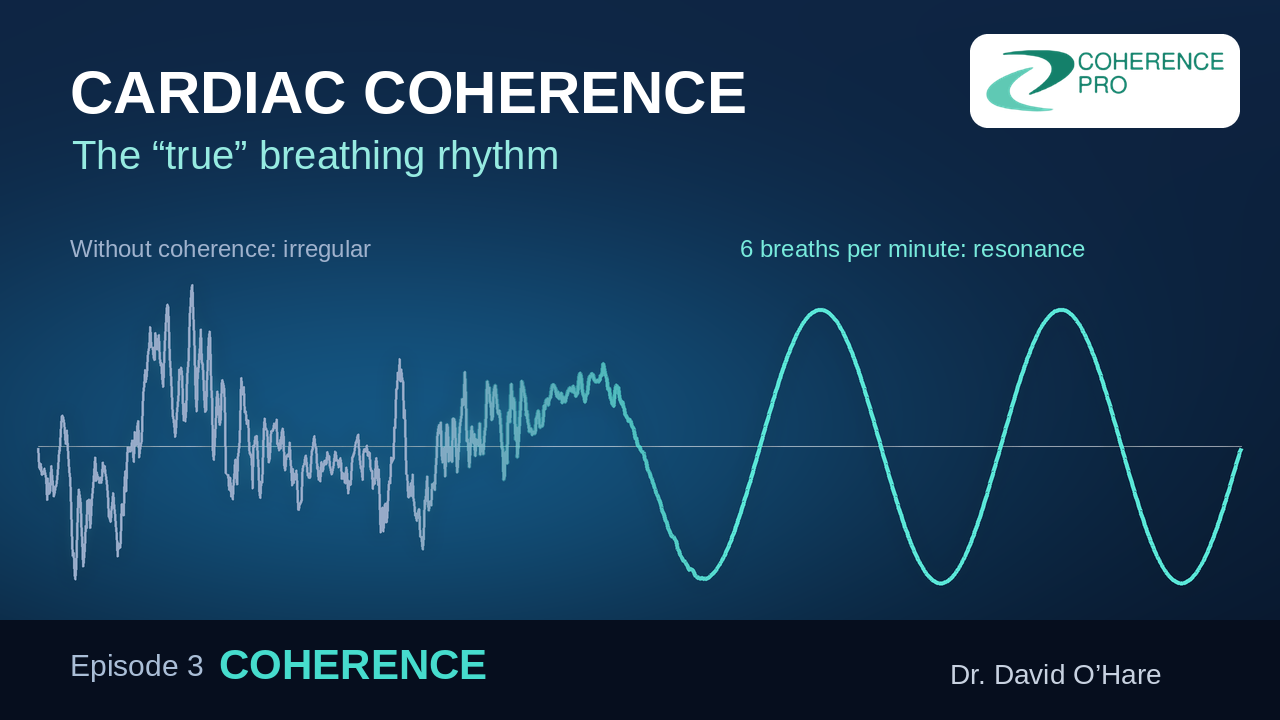
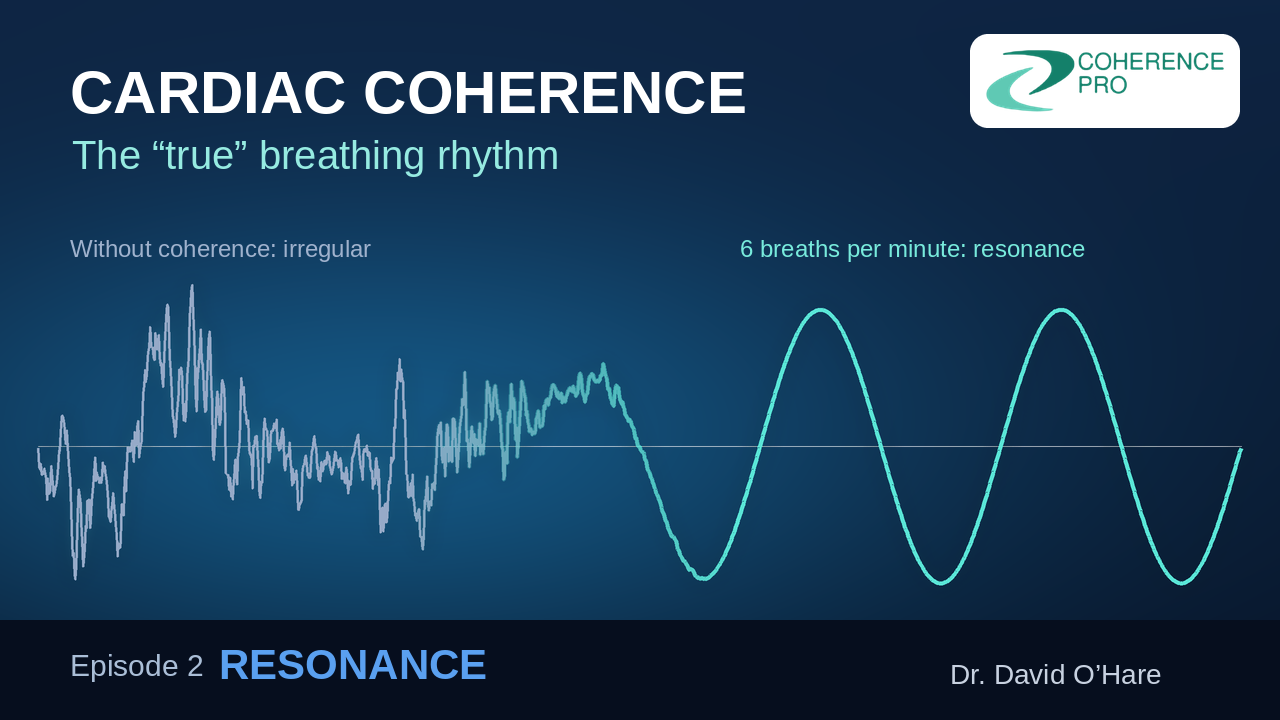
Without any voluntary intervention in breathing, this oscillation is irregular and chaotic, because it constantly adapts to the environment.
Perception of a threat → fear → activation of the sympathetic system → the heart rate rises to mobilize energy for flight or fight.
Perception of a return to calm → relief → activation of the parasympathetic system → switch to recovery, relaxation and restoration.
The environment being unpredictable, the adaptation is too, which makes the oscillation of the heart rate irregular.
Training the heart rate
The swing as a model
A swing oscillates best when the push applied matches its natural frequency exactly. A push that is too fast or too slow prevents the movement from being amplified.
Between sympathetic and parasympathetic, my heart swings.
The same goes for the heart rate: here breathing plays the role of the hand pushing the swing.
Inhalation → the heart speeds up
Exhalation → the heart slows down
In a mechanical oscillator such as a swing or a pendulum, the natural frequency is set by physical parameters. For example, pendulums with a long rod, like those of grandfather clocks, oscillate slowly, while the shorter ones of Swiss cuckoo clocks oscillate faster.
The natural frequency of the autonomic nervous system
The autonomic nervous system, which regulates the heart rate, works as an oscillator and has its own natural frequency.
In adults, this frequency is close to 0.10 Hz, or 6 oscillations per minute. When breathing is regulated at this rhythm, the oscillation of the heart rate reaches its maximum amplitude.
This frequency of 6 breathing cycles per minute is known as the resonance frequency, because it is the one that optimizes the cardiac oscillation, and it can be observed on an electrocardiogram.
Every month I run follow-up webinars to collect questions and offer my answers about cardiac coherence. I also receive many questions during my training courses, whether online, remote or in person.
Of all the questions about personal cardiac coherence practice, those about the various options for breathing frequencies and for inhalation and exhalation durations are by far the most frequent. As if there were some confusion or complexity around these notions.
From time to time we also see proposals for a “new cardiac coherence”, with variants that are sometimes fanciful, or extra options added to ever more numerous breathing guides.
I would like to take stock here, and it will take several episodes…
A reminder of the fundamentals
The notion of heart rate variability
In the natural state, in all vertebrates, the heart rate fluctuates with the environment, perceptions, emotions, situations and perceived risks, as an automatic and involuntary mode of adaptation. This is under the control of the autonomic nervous system. “Autonomic” means independent of the will.
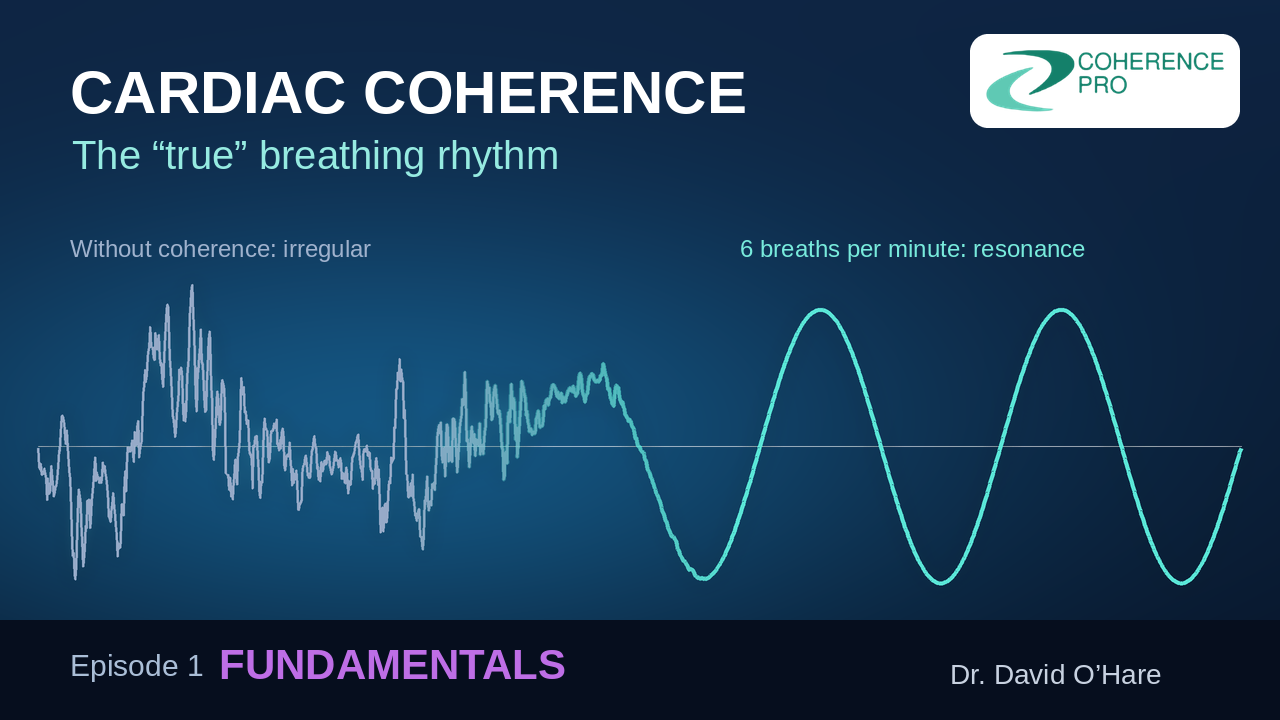
In the natural state, the heart rate fluctuates in an apparently chaotic way: that is, neither coherent, nor regular, nor periodic.
Definition of cardiac coherence
The physiological definition of coherence is a periodic fluctuation of the heart rate. This definition is based on the original, historical observation of a sinusoidal-looking curve of the heart rate fluctuation over time.
The accelerations and decelerations of the heart rate then occur periodically: the acceleration time and the deceleration time of the heart rate follow one another at constant (periodic) intervals.
The state of cardiac coherence can only be defined precisely with biofeedback equipment that displays the time analysis of the heart rate as it runs.
The role of breathing
Breathing influences the heart rate. This is called respiratory sinus arrhythmia (RSA), demonstrated in the 19th century and confirmed since by electrocardiography.
Inhalation speeds up the heart rate by activating the sympathetic nervous system and inhibiting the parasympathetic nervous system. Exhalation slows the heart rate through the opposite effect: activation of the parasympathetic nervous system and inhibition of the sympathetic system.
Any voluntary breathing in which inhalation and exhalation last equally long therefore equalizes the acceleration and deceleration times of the heart rate, through the action of RSA. A so-called cardiac coherence curve, with its characteristic sinusoidal periodicity, is then immediately observed.
When you equalize the time of inhalation and exhalation, a physiological state of cardiac coherence sets in or, as I prefer to say, a state of cardio-respiratory coherence. It is a reflex: automatic and systematic. This reflex is called the baroreflex.
Conclusion of the first part
Every time you voluntarily inhale and exhale for equal durations (whatever those durations are), you will be in a state of cardiac coherence. It is automatic; it is a reflex.
To be continued, with the notion of resonance…
The author’s commitment
I undertake to publish nothing that is not backed by one or more scientifically recognized publications, validated by peer review and published in internationally recognized journals.
References
The basics of variability and cardiac coherence, an essential article:
Chaitanya S, Datta A, Bhandari B, Sharma VK. Effect of Resonance Breathing on Heart Rate Variability and Cognitive Functions in Young Adults: A Randomised Controlled Study. Cureus. 2022 Feb 13;14(2):e22187. doi: 10.7759/cureus.22187. PMID: 35308668; PMCID: PMC8924557.
The first to publish on biofeedback:
Lehrer PM, Gevirtz R. Heart rate variability biofeedback: how and why does it work? Front Psychol. 2014 Jul 21;5:756. doi: 10.3389/fpsyg.2014.00756. PMID: 25101026; PMCID: PMC4104929.
The “bible” of heart rate variability:
Heart rate variability: standards of measurement, physiological interpretation and clinical use. Task Force of the European Society of Cardiology and the North American Society of Pacing and Electrophysiology. Circulation. 1996 Mar 1;93(5):1043-65. PMID: 8598068.
By Jean-Michel Schlupp, health trainer and consultant (patient education, psychophysiological approaches, cardiofeedback).
In my professional practice, particularly in therapeutic patient education and in hospital supportive care, I make extensive use of cardiac coherence and cardiofeedback.
Alongside Dr. David O’Hare, I am especially interested in heart rate variability (HRV), a remarkable indicator of our ability to adapt.
But my background has another dimension that I rarely share: ethnomedicine, and in particular Traditional Chinese Medicine (TCM), which I studied for my university diploma in ethnomedicine.
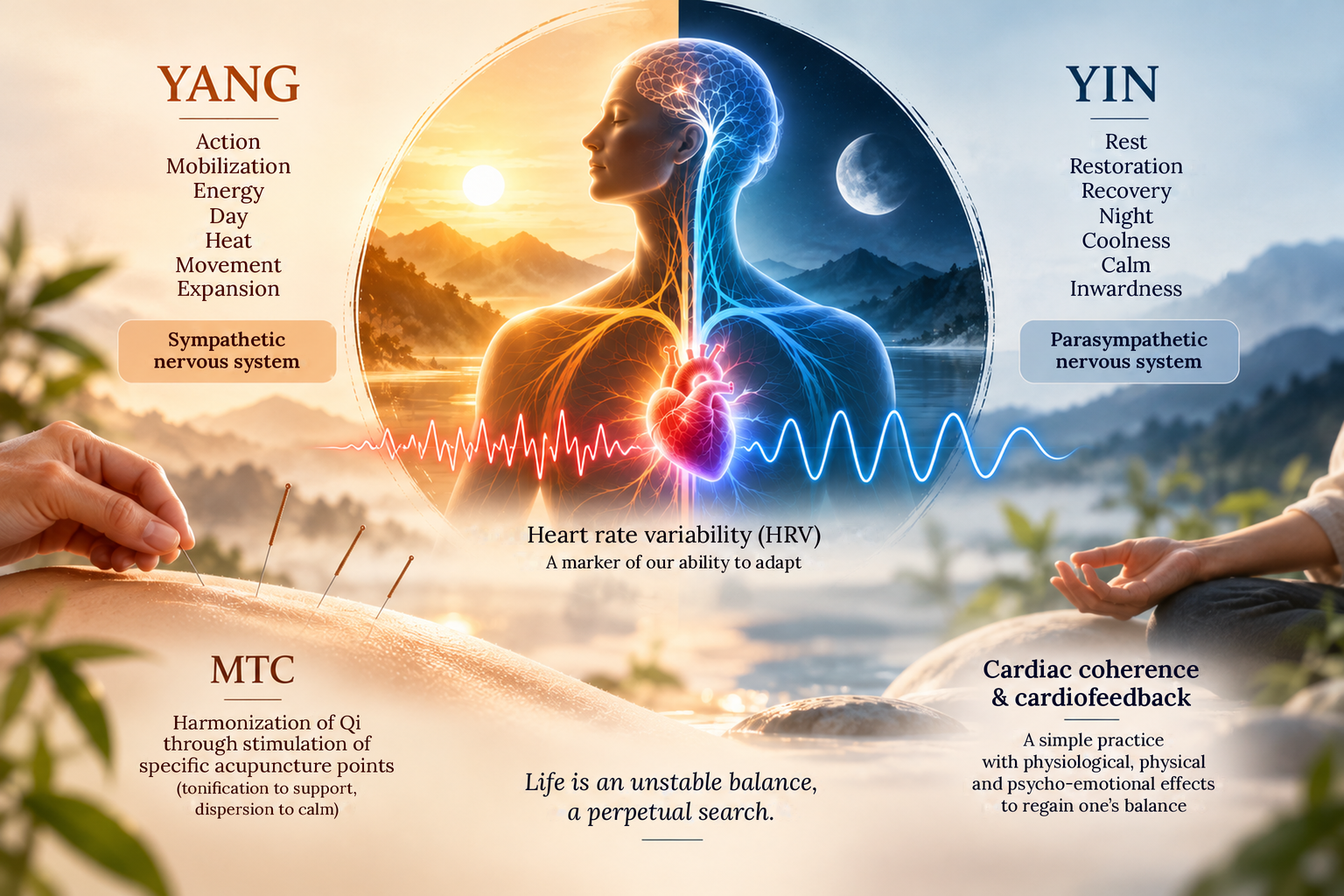
For a long time, one parallel has fascinated me: the one between our autonomic nervous system and the dynamics of Yin and Yang.
☀️ The sympathetic nervous system prepares us for action, mobilizes our resources and promotes activity. It evokes Yang: movement, heat, daytime, expansion, the masculine, action.
🌙 The parasympathetic nervous system promotes rest, recovery and the restoration of our resources. It evokes Yin: calm, coolness, night, inwardness, the feminine.
Of course, these correspondences are symbolic. Yin and Yang are not anatomical structures, nor are they equivalents of our nervous systems.
But both approaches invite us to ask the same question: how does the body regain its capacity for regulation?
In TCM, the practitioner seeks to harmonize Qi, traditionally translated as “vital energy” or “breath” (one could even see a correspondence here with respiratory cardiac coherence!). Depending on the imbalances identified, the practitioner may seek to tonify (Bu), that is, to support or stimulate a function considered deficient, or to disperse (Xie), to reduce an excess and bring calm. The practitioner may also seek to release a stagnation of Qi. Contrary to a widespread misconception, the parasympathetic nervous system and Yin are more “powerful” than the sympathetic nervous system and Yang (sorry, gentlemen! 😉
So it is not simply a matter of stimulating one or calming the other, but of encouraging a harmonious circulation between the two.
And isn’t that, in a way, what we are looking for with respiratory cardiac coherence? Through slow, regular breathing, we influence the interactions between the heart, the breath and the autonomic nervous system. There are of course other forms of cardiac coherence, less well known than respiratory cardiac coherence.
Physiologically, the state of cardiac coherence is characterized in particular by an increase in the amplitude of heart rate variability, linked to the baroreflex and vagal regulation, and by the appearance on the spectrogram of a very characteristic sinusoidal curve.
Physically and psycho-emotionally, the practice can, among other things, help release tension, bring calm, reduce perceived stress and improve emotional regulation.
These effects are documented in particular in the review by Zaccaro and colleagues (2018), published in Frontiers in Human Neuroscience. Other effects have also been documented, on the production of neurotransmitters, hormones, immunoglobulins and more.
This is precisely what interests me in supporting patients: enabling them to regain, through a simple and accessible practice, a degree of autonomy in regulating their physical and emotional states, within an integrative approach to care by a multidisciplinary hospital team.
And what about acupuncture?
A meta-analysis by Hamvas and colleagues (2023), published in Complementary Therapies in Medicine and covering nine randomized trials, suggests that acupuncture can change certain HRV indices, notably in the direction of parasympathetic modulation. The authors stress, however, that the results are heterogeneous and that further studies are needed. It is an interesting connection, even though an increase in HRV is not, on its own, proof of better health. It is nonetheless an extremely relevant indicator of our capacity to adapt, both physically and psycho-physiologically.
And then there is a wink that I particularly like…
In Chinese tradition, the number 365 has been symbolically associated with acupuncture points, echoing the days of the year.
365… like Dr. David O’Hare’s 3-6-5 method: 3 times a day, 6 breaths per minute, for 5 minutes. A coincidence, certainly, but one that I really enjoy!
Life is never still
After all, what brings these two views together is perhaps this fundamental idea: living things are never motionless.
In TCM, stagnation of Qi is regarded as a process of imbalance that, according to this traditional conception, can lead to functional disorders first and then to deeper, organic ones. In modern physiology, we also know that health depends on our ability to adapt, to mobilize our resources and then to recover. It is therefore not about being perpetually in action, nor about seeking permanent calm. Yang needs Yin. Action needs rest. Mobilization needs recovery.
As for the deep nature of Qi, it remains a notion specific to Chinese medical thought, with no physical equivalent directly established by modern science.
Finally, after all these years of practice and encounters with patients, one conviction grows stronger: life is an unstable balance, a perpetual search, an oscillation between complementary forces. A balance that was definitively fixed would no longer be the balance of living things.
What if health were not so much a state of balance as an ability, constantly renewed, to regain it?
References
Zaccaro A. et al. (2018). How Breath-Control Can Change Your Life: A Systematic Review on Psycho-Physiological Correlates of Slow Breathing. Frontiers in Human Neuroscience. https://doi.org/10.3389/fnhum.2018.00353
Hamvas S. et al. (2023). Acupuncture increases parasympathetic tone, modulating HRV: Systematic review and meta-analysis. Complementary Therapies in Medicine. https://doi.org/10.1016/j.ctim.2022.102905
Jean-Michel Schlupp is also the author of our series of reference sheets for practitioners, on stress, sleep, pain, emotions and more.
Follow us on LinkedIn for new posts on cardiac coherence.
Coherence Pro is the English-language home of Dr. David O’Hare’s training in cardiac coherence and heart rate variability.
Dr. O’Hare has taught this for decades in French. Now health and wellness professionals can follow his courses in English, online and at their own pace:
The Basics of HRV: the complete professional training in heart rate variability
A free Breathing Library
There is also a free Breathing Library, with 30 guided breathing videos you can share with your clients.
Who it is for
If you work with people on stress, sleep or emotional regulation, have a look around the site. If you know someone who would benefit, please share it with them.
Follow us on LinkedIn for new posts on cardiac coherence.
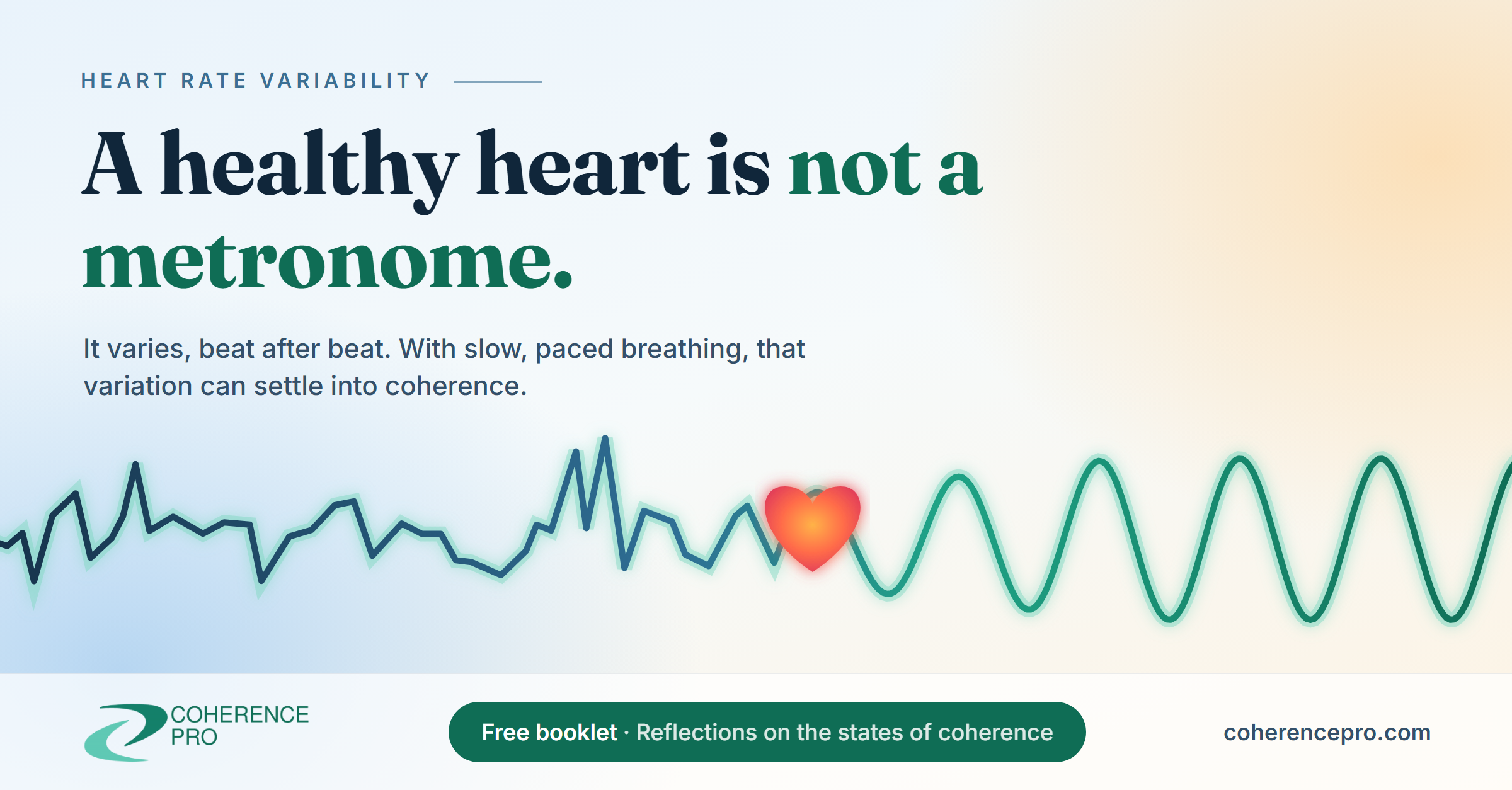
A heart that beats like a metronome is not a healthy heart.
Healthy hearts vary, beat after beat. That variation is called heart rate variability (HRV), and it is one of the clearest windows into how your nervous system handles stress.
You can influence it with your breath
The good news: you can influence it with your breath, in as little as 5 minutes. Slow, paced breathing (around 6 breaths per minute) brings heart rhythm, breathing and blood pressure into resonance.
A free booklet to start with
We are sharing a free booklet, Reflections on the states of coherence, from Dr. David O’Hare’s work. It is a short, calm introduction.
To provide the best experiences, we use technologies like cookies to store and/or access device information. Consenting to these technologies will allow us to process data such as browsing behavior or unique IDs on this site. Not consenting or withdrawing consent, may adversely affect certain features and functions.
Functional
Always active
The technical storage or access is strictly necessary for the legitimate purpose of enabling the use of a specific service explicitly requested by the subscriber or user, or for the sole purpose of carrying out the transmission of a communication over an electronic communications network.
Preferences
The technical storage or access is necessary for the legitimate purpose of storing preferences that are not requested by the subscriber or user.
Statistics
The technical storage or access that is used exclusively for statistical purposes.The technical storage or access that is used exclusively for anonymous statistical purposes. Without a subpoena, voluntary compliance on the part of your Internet Service Provider, or additional records from a third party, information stored or retrieved for this purpose alone cannot usually be used to identify you.
Marketing
The technical storage or access is required to create user profiles to send advertising, or to track the user on a website or across several websites for similar marketing purposes.